Scam Intelligence
Fraudly Intelligence
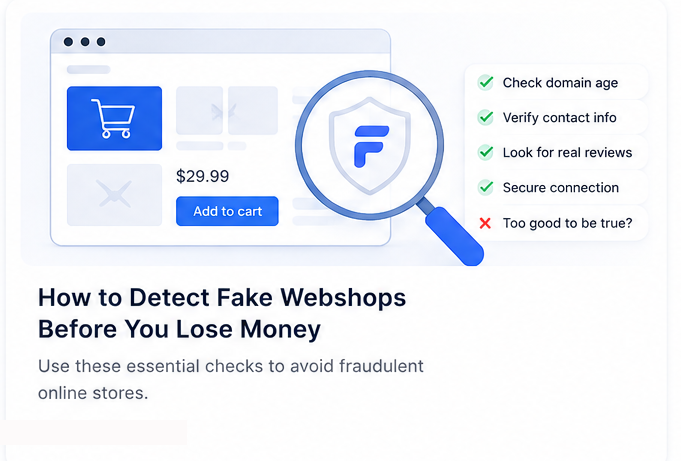
How to Detect Fake Webshops Before You Lose Money
Fake online shops steal billions each year. This guide explains the clearest warning signs—from discount traps to copycat branding—and how to verify a store before checkout.
Published May 1, 2026 · 5 min read
A polished website is not proof that a webshop is real. Criminals launch convincing stores in days, advertise on social media, and disappear once payments arrive. Learning how to detect fake webshops means combining common-sense shopping habits with a few technical checks—domain age, contact transparency, payment safety, and independent reputation signals. This guide walks through the patterns Fraudly sees most often in fraudulent stores, and shows where a structured website scam checker fits into your routine before you enter card details.
Common signs of fake online shops
Fake webshops rarely look amateur. Many use stolen product photos, professional themes, and urgent marketing copy. What separates them from legitimate discount retailers is a cluster of weaknesses: thin legal pages, inconsistent branding, pressure to pay quickly, and domains that do not match the brand you think you are buying from. Treat any unknown shop as guilty until evidence supports trust—especially for high-value electronics, designer goods, or limited-release items.
- Brand-new domain with heavy advertising spend
- Prices far below established retailers for the same SKU
- No verifiable business address or registration number
- Reviews that appear only on the shop’s own site
- Checkout that pushes wire transfer, crypto, or gift cards
Unrealistic discounts and “too good” deals
Scam shops compete on price because they never intend to ship. A 70–90% discount on in-demand products is a classic lure. Compare the offer to official brand stores and major marketplaces; if the gap is enormous with no plausible explanation (clearance, refurbished, regional pricing), pause. Fraudsters also create fake countdown timers and “only 2 left” banners to bypass rational decision-making.
Legitimate businesses sometimes run sales, but they still publish returns policies, support channels, and consistent product identifiers. When discounts are paired with anonymous operators and rushed checkout, assume risk until you verify the domain with a fake webshop check and independent sources.
Missing contact and company information
Transparent retailers make it easy to reach them: registered company name, physical address, support email on the same domain, and clear VAT or company identifiers where applicable. Fake shops often list generic Gmail addresses, vague “EU warehouse” claims, or addresses that do not exist when searched on maps.
Open the Terms, Privacy, and Returns pages. Scam sites frequently copy text from other stores, reference the wrong company name, or provide policies with broken links. Cross-check the legal entity against public business registries when buying from an unfamiliar European shop—mismatches are a strong negative signal.
Fake reviews and manufactured social proof
Star ratings can be bought. Review farms post dozens of five-star comments within days, often with vague praise (“Great shop!”, “Fast!”) and similar writing patterns. Read our dedicated guide on how scammers fake Trustpilot reviews for manipulation tactics—and remember that reviews alone never prove a site is safe.
- Sudden spike of five-star reviews on a new domain
- Reviewers with no history or only one review
- Identical phrases repeated across multiple accounts
- Website widget reviews that cannot be found on independent platforms
Domain age and technical footprint
Many fraudulent shops use domains registered weeks or months ago, then promoted aggressively before takedown. Domain age is not a verdict—plenty of honest startups are new—but a brand-new domain selling luxury goods at impossible prices deserves extreme caution. Technical checks (SSL configuration, hosting patterns, redirect chains) add context that shoppers cannot see from the homepage alone.
Fraudly combines domain signals with scam feeds and trust indicators so you can see whether a shop resembles known fraud patterns. Browse real examples on latest website checks to understand how suspicious stores appear in the wild.
Unsafe payment methods
Payment choice matters. Credit cards and reputable payment providers often include chargeback pathways when goods never arrive. Scammers push irreversible methods: bank transfer, cryptocurrency, payment app “friends & family”, or voucher codes. Any shop that refuses standard card checkout for in-stock consumer goods is a major red flag.
Also watch for checkout pages on a different domain than the storefront, or embedded payment forms that do not match the retailer you believe you are using. Phishing checkout flows are common in fake webshop campaigns.
Copycat branding and look-alike domains
Typosquatting and homoglyph domains exploit inattention: extra letters, swapped characters, or wrong TLDs (`brand-outlet.shop` vs `brand.com`). Scammers clone logos, product catalogs, and even checkout design from legitimate brands. Always compare the URL in your browser bar with the official site from a bookmark or search—not from an ad link.
What to check before buying
- Confirm the exact domain and whether it matches the brand’s official channels
- Read independent reviews on third-party sites, not only on-page widgets
- Verify company identifiers, support email on-domain, and return policy realism
- Prefer payment methods with buyer protection; avoid irreversible transfers
- Run a structured website trust check and review recent public scan examples
If multiple warning signs appear together, walk away—even if the product photos look convincing. Reporting suspicious ads and domains helps platforms and consumers, but your first goal is not to fund the operation.
Use Fraudly to check webshop safety
Fraudly is built for high-intent safety checks: paste a shop URL into the free website checker to see trust-style scoring, phishing and scam-feed context, and technical signals in plain language. Results are informational—not a guarantee—but they help you decide whether to proceed, pay with extra protection, or choose an official retailer instead.
For step-by-step habits around HTTPS, reputation, and phishing indicators, read how to check if a website is safe. For a concise checklist of red flags, see top warning signs of a scam website.
Related Fraudly resources
- Stay Safe OnlineClear answers on website trust, phishing, fake shops, and safer payments—tied to Fraudly’s checkers.
- Check a websitePaste a URL for a free trust check on websites and online stores—scam signals with plain-language context.
- What to do after a scamPractical steps and official reporting links if you think you were scammed online.
- Spot a fake online storeLearn warning signs of copycat shops—discount hype, thin policies, and trust red flags.
- Scam awareness certificateTest your scam detection skills and earn a shareable Fraudly certificate.
- Fraudly PremiumScreenshot analysis, QR code checks, Deep Scan, and Live Protection — one Premium on Website, iPhone, Android, Chrome, and Edge. URL checks stay free.
Recent website safety checks
Real public trust snapshots from Fraudly—open a full report for any domain.
Related intelligence
More consumer protection and threat awareness guides from Fraudly Intelligence.
 Scam Intelligence
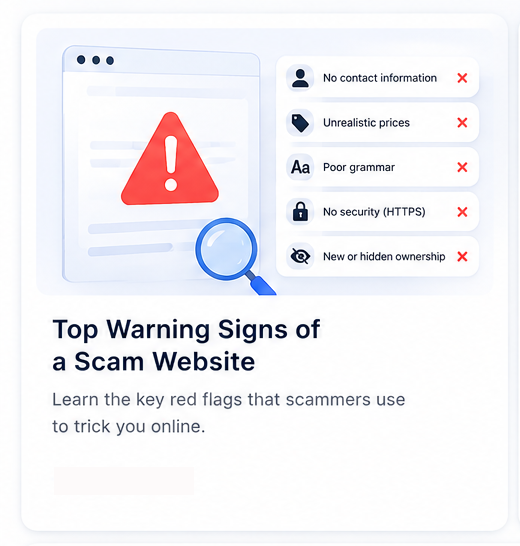
Top Warning Signs of a Scam Website
Use this checklist of scam website red flags before you pay or log in—from domain age and discount traps to suspicious checkout flows and redirect scams.
4 min read →
 Scam Intelligence
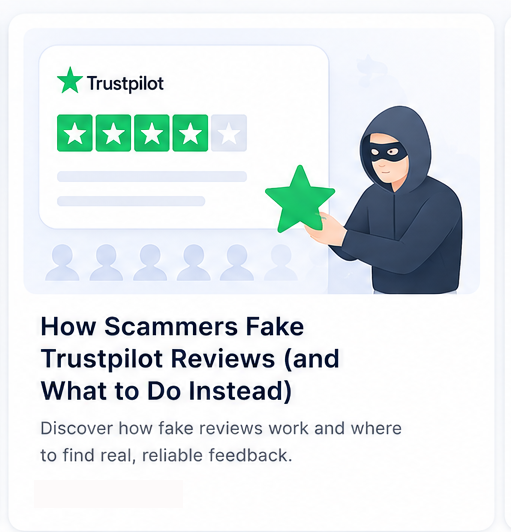
How Scammers Fake Trustpilot Reviews (and What to Do Instead)
Trust scores can be manufactured. Understand review farms, bought testimonials, and why Fraudly combines reputation signals with technical website analysis.
4 min read →
 Fraud Prevention
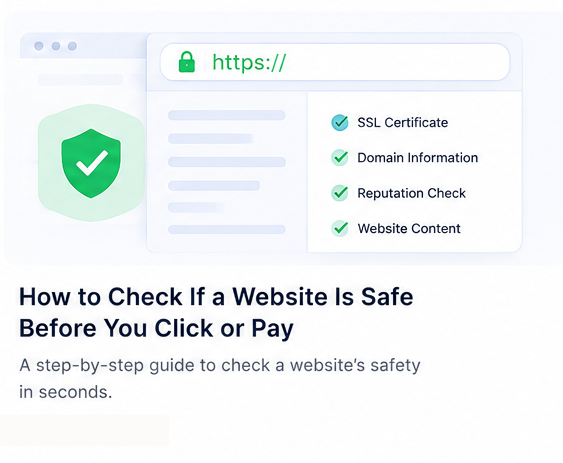
How to Check If a Website Is Safe Before You Click or Pay
HTTPS alone does not mean a site is trustworthy. This guide explains practical checks—technical, reputational, and behavioral—so you can decide whether to trust a link.
4 min read →
Social media scam ads
Paid social posts are a primary acquisition channel for fake webshops. Ads use stolen lifestyle imagery, influencer-style clips, and comment sections seeded with fake testimonials. If you discover a shop through Facebook, Instagram, or TikTok, verify it independently before purchasing—do not trust likes or comments as proof of legitimacy.
For broader threat context, follow public scam alerts and compare suspicious domains against community-reported patterns.