Scam Intelligence
Fraudly Intelligence
How Scammers Fake Trustpilot Reviews (and What to Do Instead)
Trust scores can be manufactured. Understand review farms, bought testimonials, and why Fraudly combines reputation signals with technical website analysis.
Published May 7, 2026 · 4 min read
Trustpilot and similar platforms help consumers share experiences—but a high star rating is not a safety certificate. Organized scammers purchase reviews, operate review farms, and flood new fake webshops with credible-sounding praise within days. Understanding fake Trustpilot review tactics helps you avoid costly mistakes, especially when a unknown shop advertises “4.9 stars” while hiding weak company details. This guide explains manipulation patterns and why reviews must be combined with technical and scam-intelligence checks.
Bought reviews and incentivized praise
Gray-market services sell bundles of reviews for a few dollars each. Sellers promise “non-drop” ratings and UK or EU personas. Incentivized campaigns—discounts for five stars—skew scores without disclosing bias. The result is a profile that looks established while the underlying business is a shell site.
Regulators and platforms pursue abuse, but volume outpaces enforcement. Treat sudden perfect scores on young domains as a hypothesis to test, not proof of quality.
Review farms and coordinated accounts
Review farms use aged accounts, residential proxies, and scripted narratives. Comments reference plausible product names but lack specifics only a real buyer would include (batch issues, exact delivery windows, support ticket outcomes). Multiple reviews posted within hours, then silence, mirror campaign timing rather than organic shopping seasons.
Review manipulation patterns
- Duplicate phrasing across different reviewer names
- Overuse of superlatives with no critical detail
- Reviews only on the platform widget, absent elsewhere
- Company replies that are generic or copy-pasted
- Mismatch between review volume and visible web traffic or history
Scammers also brigade competitors with one-star attacks while boosting their own properties—star counts become weapons, not information.
What consumers should watch for
Read one- and two-star reviews first—they often contain fraud allegations ignored in marketing screenshots. Sort by recency and search inside reviews for refund, scam, or chargeback keywords. Cross-check the company name on the review profile with the legal entity on the website; mismatches matter.
If reviewers link to unrelated products or countries that do not match the shop’s stated market, treat that as noise.
Why reviews alone are not enough
Reviews measure reported experiences, not future intent. A scam shop can ship a few items early to harvest stars, then vanish. A legitimate shop can have angry reviews from shipping delays. Reviews lack visibility into domain age, phishing feeds, payment risk, and impersonation—signals that predict fraud before checkout.
What platforms try to stop
Review platforms invest in fraud detection—velocity limits, device fingerprinting, and reporting tools—but adversaries adapt. Public profiles can be cleaned after abuse, then repopulated. That arms race is why your personal skepticism still matters. Flag obvious farms when you see them; legitimate merchants also suffer from fake positives when competitors attack them.
Widgets embedded on a website only show selected reviews. Always visit the full profile on the platform itself and read across star levels, not only the marketing snippet.
Combining technical and reputation checks
Use a layered approach: reputation platforms for narrative context, plus structured website analysis for objective signals. Fraudly’s website scam checker highlights trust-style scoring, scam-feed matches, and technical context alongside whatever stars you see elsewhere.
Browse latest public checks to compare how suspicious shops present versus established retailers. For storefront-specific red flags, read how to detect fake webshops and top warning signs of a scam website.
When reviews and technical checks disagree, slow down. Prefer retailers with verifiable identity, safer payment options, and consistent history—or walk away.
Related Fraudly resources
- Stay Safe OnlineClear answers on website trust, phishing, fake shops, and safer payments—tied to Fraudly’s checkers.
- Check a websitePaste a URL for a free trust check on websites and online stores—scam signals with plain-language context.
- What to do after a scamPractical steps and official reporting links if you think you were scammed online.
- Spot a fake online storeLearn warning signs of copycat shops—discount hype, thin policies, and trust red flags.
- Scam awareness certificateTest your scam detection skills and earn a shareable Fraudly certificate.
- Fraudly PremiumScreenshot analysis, QR code checks, Deep Scan, and Live Protection — one Premium on Website, iPhone, Android, Chrome, and Edge. URL checks stay free.
Recent website safety checks
Real public trust snapshots from Fraudly—open a full report for any domain.
Related intelligence
More consumer protection and threat awareness guides from Fraudly Intelligence.
 Scam Intelligence
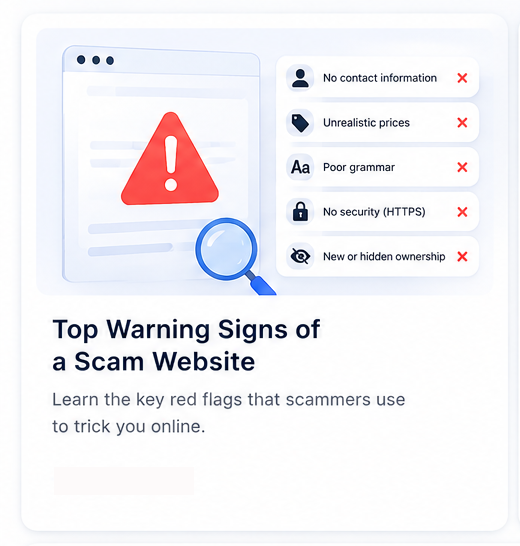
Top Warning Signs of a Scam Website
Use this checklist of scam website red flags before you pay or log in—from domain age and discount traps to suspicious checkout flows and redirect scams.
4 min read →
 Fraud Prevention
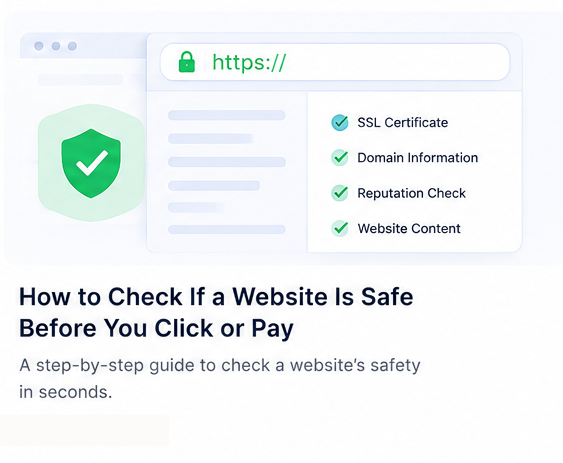
How to Check If a Website Is Safe Before You Click or Pay
HTTPS alone does not mean a site is trustworthy. This guide explains practical checks—technical, reputational, and behavioral—so you can decide whether to trust a link.
4 min read →
 Consumer Safety Guide
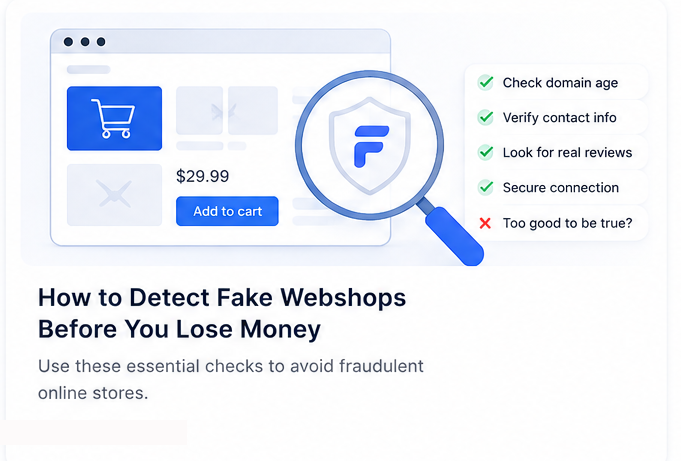
How to Detect Fake Webshops Before You Lose Money
Fake online shops steal billions each year. This guide explains the clearest warning signs—from discount traps to copycat branding—and how to verify a store before checkout.
5 min read →